Thursday, April 26, 2012
Research Topic
I'm going to study and analyze the song "Ohio" by Neil Young to learn about the Kent State massacre and music of that time.

Monday, April 2, 2012
Children Playing in the Street

Children Playing in the Street
Walker Evans
I think Evans took this picture to capture the true emotions that were omnipresent during the Great Depression. Emotions that were clear even on the faces of young children. Their faces show sadness and despair as each of them are wearing ragged clothes. They seem to have nothing to do, as if they have no purpose. The depression has not only clearly effected their outward appearance, but it is clear from this photo that their inner beings have suffered as well. Their parents are probably out looking for work just to put a meal on the table for super. The younger boy sitting on the stairs looks skinny and hungry. They seem alone and desperate. This picture does a really good job of capturing how the depression effected everyone during that time period and caused a lot of hardship and despair.
Saturday, February 11, 2012
American Conscientious Objectors WWI
 |
| Conscientious objectors took freedom of speech to a new level and caused much controversy. My Ohhhh so very exciting topic to research is the AMERICAN CONSCIENTIOUS OBJECTORS in WWI. WOOHOO! A conscientious objector is a "person who, on the grounds of conscience, resists the authority of state to compel military service." In other words, someone who does not feel it necessary to fulfill the obligation of an American citizen by serving in the military for his/her country in times of need. Religious beliefs are the main reason behind most peoples defiance and refusal. This was happening all throughout both world wars, not just in America, but in many countries around the world. |
While reading "A Defense of Draft Law Defiance" by Roger Baldwin in a book World War I , I learned that during WWI, many Americans strongly objected the idea of fighting and violence and refused to be drafted into war because of this. These people became to be known as Conscientious Objectors. I was not surprised when I read that religious beliefs and political ideals were among the reasons behind why people were so against war. Men all over the country were making it very clear that they did not believe in all that war entailed and had no intentions of fighting for their country. But some men, had no reason at all besides not wanting to be pushed around by the government.
I found a really interesting primary source in the same book that was written by a man who refused to take a physical examination for the draft. Roger N. Baldwin wrote that he knew what the consequences would be and after refusing to take the examination he walked himself straight to the United States Attorney who would surely throw Baldwin in jail. Apparently he was just angry and was not going to be told what to by the government. He said "I regard the principle of conscription of life as a flat contradiction of all our cherished ideals of individual freedom, democratic liberty, and Christian teaching." He basically said that the war was immoral, stupid, and against all Christian beliefs. He knew he was stubborn in believing this said that he was probably a bit extreme in his thinking. But I think it is cool that he stood his ground despite the possibility of imprisonment.
I'm having trouble finding sources about Conscientious Objectors in the United States during World War I. I have been finding a lot about limits put on CO's during and after World War II and some about British objectors in the first World War. What I have found out, is that during World War I, Conscientious Objectors had to have a religious or political reason for not joining the draft. Those without reasons involving one of the two were normally tossed in jail. The largest group of radical objectors seem to be people claiming to be devout "Christians". Among those are a large number of Mennonites and Amish people. This database talks about most lists of objectors had the names and religious views of the men refusing to be drafted. The person who wrote this database got all of his information from Mennonite historians and universities which tells me that those were the people keeping track of the names CO's.
So I was reading about how Mennonites and Amish people were among the largest groups to refuse to serve and I was curious as to why that is. I am interested in the differences and similarities between Mennonites and Amish and what beliefs would have prevented them from being able to serve. I found a source that compares and contrasts the Mennonite and Amish beliefs and culture. According to this article, the religious views of the two groups are very similar, coming from the early Anabaptist group that started in the 1500's. They differ in the strictness of their attire and technology and sometimes in language. Although they believe in the same basic teachings of the bible, some interpretations vary between the two groups. There strict believe of non-violence and their refusal to use new technology were the main reasons they would not join the draft. They truly believed their service would be going against God's will and the bible teachings.
I really am not finding any new information about these Conscientious Objectors, everything is just talking about why they were against fighting and what happened to them if they refused to do so. I find it interesting that the government was so lenient with these people for so long. To some extent I feel like the government was being taken advantage of by some people who just did not want to comply with the rules. Although I do not agree with all the non-violence beliefs, I completely understand the governments willingness to not encroach on religious beliefs since that is a freedom we are given as Americans. I do feel like as an American citizen it is our duty to serve our country in times of need. But for those who truly believe that is against God's laws, I also believe that a person's religious views are not something to toy with. Either way, the draft was effective and the CO's really did not make up such a percentage of people that the American military power suffered too greatly.
I'm having trouble finding sources about Conscientious Objectors in the United States during World War I. I have been finding a lot about limits put on CO's during and after World War II and some about British objectors in the first World War. What I have found out, is that during World War I, Conscientious Objectors had to have a religious or political reason for not joining the draft. Those without reasons involving one of the two were normally tossed in jail. The largest group of radical objectors seem to be people claiming to be devout "Christians". Among those are a large number of Mennonites and Amish people. This database talks about most lists of objectors had the names and religious views of the men refusing to be drafted. The person who wrote this database got all of his information from Mennonite historians and universities which tells me that those were the people keeping track of the names CO's.
 |
| Many Christian groups were very much against non-violence and used their religion as a way to avoid the draft. |
I really am not finding any new information about these Conscientious Objectors, everything is just talking about why they were against fighting and what happened to them if they refused to do so. I find it interesting that the government was so lenient with these people for so long. To some extent I feel like the government was being taken advantage of by some people who just did not want to comply with the rules. Although I do not agree with all the non-violence beliefs, I completely understand the governments willingness to not encroach on religious beliefs since that is a freedom we are given as Americans. I do feel like as an American citizen it is our duty to serve our country in times of need. But for those who truly believe that is against God's laws, I also believe that a person's religious views are not something to toy with. Either way, the draft was effective and the CO's really did not make up such a percentage of people that the American military power suffered too greatly.
Tuesday, January 31, 2012
Wilfred Owen (poet)
I read an article about Wilfred Owen who was an English soldier in the first World War. He knew the severity of the war and returned to England after school to train to fight for his country. He was sent to France where he was wounded and sent to the hospital. In the hospital he met and became friends with a man named Seigfried Sassoon who was a poet. Sassoon and Owen became friends and that is where Owen squired his writing style and his love for poety. Two of Owens most well known pieces of writing are "Dulce de Decorum Est" and "Anthem for Doomed Youth". I looked at his actual manuscript of "Dulce de Decorum Est" his handsriting is messy like he was writing ideas quickky as they came to his mind. He scratched through a lot of what he wrote and edited a lot. The poem is actually about the war itself and is very visual and I vivid. His poetry became a good therapy for his mind and he used it to write down his experiences. After he recovered, Owen was sent back out to fight where he became a war hero for his courage and leadership abilities. Owens died in battle but became a war hero and a well known poet.
Friday, January 13, 2012
Great White Fleet Research
So far for my research I have found a crazy good source through the Alabama Virtual Library under student resources about the Great White Fleet. The artical I found has good information reguarding the fleet along with a bunch of great pictures. It even has a list of all the stops that the Great White Fleet made on its journey. I still need a primary source and a few other things but this one source has a lot of the information I need. It is the link I uploaded on the previous post. Id like to find a few more things about life on the journey or more personal details about the Fleet but this is a good start.
Thursday, January 12, 2012
Monday, November 7, 2011
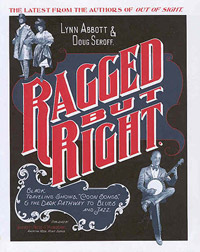
The Importance of Ragtime and Scott Joplin
 |
| Scott Joplin-ragtime composer |
 |
| Cakewalk dance |
 |
| Coon song |
 |
| Scott Joplin on piano |
 |
| Modern music |
Subscribe to:
Posts (Atom)